There are three questions I’ve gotten, often, since getting a tattoo. Here are my answers:
Author: Michael King
Writer. Chases joy. Working to share the mess and the magic.
something honest.
Sometimes the story we tell the world isn’t half as endearing as the one that lives inside us.
I read this quote today in Scary Close, a book lent by a friend. I’m only three chapters in, so I’ll resist expanding much on its content for now, but I’ll say that it is already opening doors and windows within me.
After reading this quote, I felt worried I share only the highlights of my life. Only the moments of strength, bits of wisdom and clarity, and that I resist lifting up my pain. Perhaps my best stories are locked away, kept carefully hidden so that I might be worthy of love.
So here’s something honest. Here’s something I wrote on a hard morning, through a wall of tears, as I tried to make sense of the mess.
book club: ‘ready player one’.
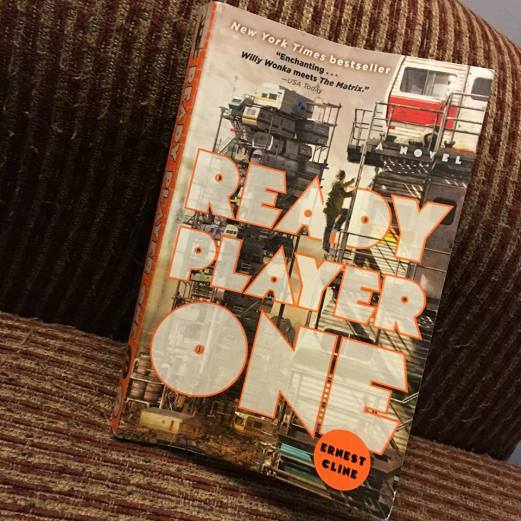
This summer, in New York City, I read a bit prolifically. I read The Gilded Razor, Sarah Silverman’s autobiography, and the ending pages of Love May Fail. As I sat on the train, reading these, I noticed a common novel in people’s hands: Ready Player One. One morning, following breakfast with my friend Phil, we traveled to McNally Jackson. There, I picked up my own copy.
the year of.

the year of the breaking, first apart and then through. the year of words can’t restore everything, the limits of linguistics. the year of a thousand settings, but only now just venturing out of my head. of miles and miles of running, of hustling, for someone who walked away. the year of forgiveness, of letting go of heavy things to make room in my fingertips for the breeze. the year of learning things the hard way, that a person’s selfishness cannot be loved away, that my own brokenness was never anyone else’s to heal. the year of finding my strength in my shattered pieces, in my willingness to sit with my pain and study it and feel alive with it. the year of new horizons, of the courage to try again. the year of being brave, of working courage into a verb, of couraging. the year of discovery, this magic, was it here all along? the year of love, when it matters most, when it’s not easy, to everyone I have loved or will love. the year of searching for starlight.
after a fire.

After a fire, it is human nature to sit, to drape a blanket around our shoulders and stare out and ponder, to consider the days and weeks and months leading in. How did I get here, we ask ourselves, our faces charred by black smoke, our organs recoiling from the flames remembered. We inhale; we exhale. We are never more present in our bodies than when we are healing.
26: the golden year.
It’s in my nature, I suppose, to pause at the milestones and try to make meaning of the journey freshly fading. So it was with 25, and so it shall be with 26. Born on the 26th, I awaited 26, my golden year, for a long time. Who would I be? How would I live?
As I welcome 27, I think I can shed some light onto these questions.

book club: ‘love may fail’.
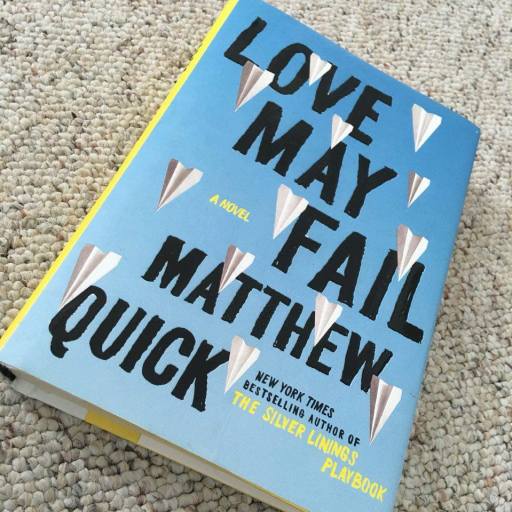
I read my first Matthew Quick novel – The Good Luck of Right Now – during a summer 2015 week in New York City. Suggested by a Buzzfeed article, the story captured me quickly with its compelling narrative (each chapter is a letter to Richard Gere) and interesting, deeply human characters. When my brother read Love May Fail, he quickly directed me to read it as well. Bringing it with me to New York City this summer, I finished it in an Astoria coffee shop, my eyes stained with tears.
thoughts on stubborn light.
No lengthy preamble this time. Instead, let’s cut to it: Here are a few scattered thoughts on projecting light in the world.
- Thoughts and prayers. With unrest and division giving rise to violence and tragedy, the ‘thoughts and prayers’ we post to our social media have come under criticism as a stand-in to legitimate action. Today, in a discussion on the events of the past week, we wrote our thoughts. Reading mine, I thought, maybe my ‘thoughts and prayers’ are ideas like ‘love is stronger than hatred’ and ‘we can change the world.’ Maybe we need to speak less and do more.
- What I can do. After a week of heavy pondering, I took a note from my own guidebook and searched for my magic amidst my ‘greatest hits.’ That is, I looked back on the moments I felt most certain I had done something positive. My best work – my magic – always emerges in helping people see more in themselves and in giving people a safe space to grow through their discomfort. Maybe I can help heal some of the hatred in people’s hearts.
- Tending a broken heart. The risk of loving is finding that you aren’t loved in return. There is tremendous power, however, in discovering that your broken heart hasn’t broken you.
- Love. I want love to be at the center of my actions, perhaps because it is through love that I find my strength. Perhaps because only love can carry us – any of us – out of the dark.
- Stubbornness. How to be a light in the stubborn darkness: Let light be more stubborn than any onslaught of shadows. Burn brighter, even, when you are tempted to flicker out.
poetry & the gertrude stein test.
In college, as part of my English degree, I took a class on writing and reading poetry. I approached the course the way a lot of young people approach poetry: with a mix of skepticism, uncertainty, and reluctance. I knew enough of poetry, I suppose, to know that it didn’t need to have a rhyme scheme, but I favored rhyming poems nonetheless.
The first poem I wrote for the course compared writing to running, both of them liberating and capable of breaking through internal barriers, both of them about untying knots. The first line was ‘Writing is a lot like running.’ The class’s response was clear: I had good ideas, but it didn’t move them.
pride & prejudice: scattered thoughts on orlando.
1 year. Nearly a year ago, the Supreme Court made its ruling on marriage equality, and celebration erupted. Facebook burst into rainbows, emotional declarations of love and pride, and a door seemed to have opened. Inspired and stoked to action, I published an entry called ‘into existence,’ in which I spoke myself out loud. Finally, I thought, I had the courage (and a safe enough world) to be myself, fully and authentically.
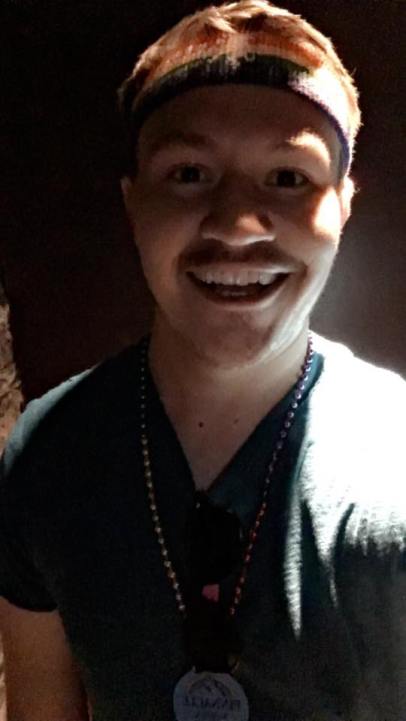
2 days. Two days ago, I made my way to Indianapolis Pride. I donned a rainbow headband, hugged my people, and celebrated beneath a gorgeous summer sky. What a vital, important thing, I thought, to celebrate the wild courage we’ve found. Held hands, wide smiles, drag queens in 95 degree weather. An utter expression of freedom.
1 day. Waking up to news of the Orlando shooting, a massacre that cut short the lives of fifty – fifty – human beings, was a punch in the gut. Throughout the day, updates grew increasingly grim. What a stain, this massacre. I held my breath; I waited for words from my family. But none came.

–
The cost of coming out. A year ago, I found the courage to profess myself, to speak myself into existence. I am often quick to endorse authenticity, but it is perhaps also important to lay out the costs. The things we give up. What must we leave behind to move forward as ourselves?
- The comfort of our walls. For LGBT+ people, life before coming out often feels restrictive and dishonest. We find ourselves unable to answer some questions, uncomfortable in our own skin, uncertain of the future. But still we often hesitate to share ourselves with others. Behind walls, we do not have to worry we will be rejected, left behind, murdered.
- The simple, dishonest relationships. Whether with family or friends, relationships prior to coming out are established, simple, and predictable. The moment we come out, we open the door to honesty and complexity. I don’t know a single person who’s come out and hasn’t felt at least a partial loss of a significant relationship.
- The weight of living more than one life. There is a specific burden to maintaining two versions of ourselves. Perhaps most of all, our true life experiences become increasingly unknown to the ones we are working to protect from ourselves, and the distance between us quietly grows. Before coming out, I remember looking in the mirror at home, a stranger to myself. You fake, I thought to myself. You utter fake.
- Safety from hatred. Because, the moment we begin to live as ourselves, we open ourselves up to a world that has, time and time again, shown us that hatred is present (sometimes hidden and other times not) and ready to violently erase us. The world may be moving forward, and we may carry with us wild courage and optimism and hope, but small acts of being – holding hands with our partners on the street, donning symbols of pride, attending safe spaces designed to let us be ourselves – require some surrender of safety from hatred.
–
What I think people most misconstrue about LGBT+ people. Pride is, in and of itself, a wild celebration. It is a declaration of the self, and it is the long-restrained exclamation of a people often urged to repress, to silence, to hide. The images of Pride, I think, are often society’s default images of LGBT+ people: men thrusting on floats in Speedos, drag queens kicking and pirouetting on stages, rainbow paint and confetti and balloons, condoms thrown onto the streets.
I’m not here to denounce Pride celebrations; in fact, I think they are essential to the survival of a deeply human group of people. We are so often told to silence our declarations of self, or perhaps just to whisper them behind walls, that the annual opportunity to profess ourselves with an exclamation point is freeing, validating, liberating.
But who we are cannot be reduced to confetti and rainbows and floats on the street. We are not simply The Golden Girls and bitchy one-liners and drag shows and gay best friends. We are more than sex, pulse music, and diversity presentations. To see us this way, in two dimensions, is to deny us the reality of our authentic, deep humanity.
We are brothers and sisters, daughters and sons. We aspire to love and be loved. We are poets, accountants, scientists, and dental assistants. We pray and we struggle and we look at the stars at night, just like you, and we wonder at the universe we’re a part of. When we find love, we can’t believe it, because we thought for so many years that we’d always feel alone. We hold one another in long, tender hugs, resting in each other’s arms and helping one another through challenging times. Our hearts break and they heal, and we dream of building families and watching our dreams become realities. We grow older, we grow braver, and we continue working to unravel the mystery of ourselves. We are spectacular collections of stardust, given life and the absurd miracle of humanity, and we aspire to leave our handprint on the world we inhabit. This is it, our human dimension.
Don’t you dare reduce us to anything lesser.
–
A reminder. It is not the mark of love nor wisdom to react to a tragedy by reducing an entire group of people to the actions of one. The Orlando shooter was a radical, yes, and he would have been likely to attribute his actions to Islam.
Blood donations have been sorely needed in Orlando since the incident, and lines have appeared out the door. Lest we forget, gay men are still prohibited from donating blood (unless we are willing to claim celibacy for a year), opening an old wound as a community tends to a new one.
A group of young Muslims stepped forward to donate blood, denouncing the actions of the shooter and giving literal life blood to a community in need.
That is what it looks like to push light into the darkness, to paint over hatred with love. That is what love looks like in action.
–
Love letters. The shooting in Orlando brought to death fifty people, cutting short their deeply human stories and hindering the greater collective story of humankind. These people were killed, by all accounts, for being who they were.
I wonder, of those fifty, how many of them remained a mystery to the people in their lives. How many parents are now regretting squandering the opportunity to know their children? To fully embrace them? Before they died, did they regret their courage? Their authenticity?
It is my philosophy that, whether we want them to or not, our lives will ultimately serve as love letters to one thing or another. When we die, and others gather to reflect on our lives, the true nature of our love letters is often revealed. He lived for his family, perhaps, or She loved nothing more than to see communities improve. Faith, love, addiction, travel, adventure… there are many candidates for love letter reception.
If ever it comes to pass that I am killed for being who I am, I want my life to serve as a love letter to courage, authenticity, and love itself. I want to live so that others around me are emboldened to be themselves, to reach new heights, and to know and feel love.

 michael king