part ii: the heart and the mind.

user's manual

All right, this takes a little bit of explaining: Within you are two entities, your Heart and your Mind, that work together to move you through the process of life.

Your Heart (which is particularly dominant in its governance of you, by the way) prefers to make decisions based on feelings and abstract notions such as compassion and the transformative power of love and the greater good of humanity. Your Heart concerns itself with the well being of others, especially those you love.

Your Mind (which is often quite tired of taking orders from the Heart) prefers to make decisions based on what it’s observed before and what it sees as the logical end result of behavior. The Mind is also particularly insistent upon scraping past memories and showing your Heart where it missed specific inconsistencies and signals, which your Heart does not appreciate. The Mind is focused on your preservation through strategy.

As you might guess, being dominated by the Heart can present occasional problems during a healing process. Healing is, by nature of its purpose, a selfish process. It will require you to take up space, say ‘no’ when your instinct to please others arises, and generally do whatever it is that the Mind has found to be nurturing to your greatest welfare.

While it’s not terribly pleasant, we are pleased to say that the pain your Heart is experiencing does enable your Mind to take charge a bit more than usual. And, given the rarity with which the Mind gets the driver’s seat, it is a minor understatement to say that the Mind ‘makes itself at home.’ You will be rational, calculated, and direct about what it is that you need to heal, and your Heart will often be relieved at the results.

The Mind without the Heart, however, can be a bit ruthless in these times. Scouring memories of the past for the aforementioned inconsistencies and signals, it can become forgetful of the Heart’s commitment to empathy. The Mind will want to ask questions, demand answers, and express its anger.

Because you are ruled by the Heart, you will not be able to allow the Mind to reign without belaboring your Heart further with remorse. As such, you will need to remind your Mind to proceed with kindness. At times, your Heart may overdo it, but your Mind will begrudgingly accept this is as a lesser risk to your well being than cruelty.

As time moves on, and as you approach the finish line of ‘normalcy,’ you will find the Heart gradually gaining strength. The Mind, having surveyed you for any cracks or vulnerabilities, will then sigh, satisfied with itself, and give over the wheel. Your Heart will return to its station, able once more to feel and give love openly.

It is in this state that you will feel most strong, most certain, and – as you might imagine – most yourself.

part i: introduction to a broken heart.

user's manual

Listen, and listen well: The end goal, the finish line to this process, is for you to feel ‘normal’ again. The challenge –– think of it, if you will, as a series of hurdles –– is that life with him has become your normal. You will need to take steps to establish new routines, new supports, new things to look ahead to.

We know –– seems pretty far off. But we wanted to start you off with an idea of where we are headed. No, there’s not a way to rush through the process. No, we can’t speed the time. Yes, sir, we know that you’re usually the one coaching others through this, and ––

Sir. If you’d just listen, that’s ––

Sir. Please take a seat. Yes, it’s okay if you cry. No, don’t look in the mirror while you’re doing it. It is a universally strange experience to see one’s puffy, crying face. As I was saying, you brought us to an important point: The people you love are going to rescue you. Yes, that means you’ll have to be sad with them. Yes, they want to. No, they don’t think it’s a burden. Yes, really.

Recently, you came in possession of a broken heart. We know this is no call for congratulations, and we know you’re tired of hearing people say they’re sorry. So allow us to state the facts: The heart you possess is broken. You summoned your courage, held it out, and the one you gave it to left. Now it’s broken, it’s crying out, and –– well –– it’s yours.

The purpose of this manual, as you might imagine, is to help you find your way back. Though the walk ahead has many names, and these journeys are a bit nuanced, we have done our best to prepare to assist you in your walk.

Now, as far as establishing a new normal, let’s use some things you already know from past difficulties: First, running helps you process the pain. Yes, you can listen to the Last Five Years soundtrack. You will cry sometimes, as you run, but that makes it hard to breathe, so you will inevitably learn to breathe through the pain instead. This is therapeutic, and you will need to find time to do so.

The people who love you will reach out in the ways they know best. Many will tell you really wonderful things about yourself, and you are likely to argue with them inside your head. Try to resist this. Accept all the love you are given, and do your best to go along with the ones who are working to get you out of wallowing.

Sleep will take a while to resume. Night is when you are most prone to make sense of your day, and even the brightest of days gives way to the contemplative shadows of night. Stay on friends’ couches as long as you like, provided they are willing. You do your best sleeping surrounded by people who believe in you, and that is necessary during this time.

Every broken heart is different, despite what the clichés of contemporary music would have you believe. The path to the end goal – a reminder, this a sense of normalcy – is different for everyone.

Your friends will see through your bravado when the pangs of heartbreak break the surface. Your eyes will go to a different place during a group conversation, or they will catch you taking a long pause and surveying the world. You can choose whether or not to explain to them that what you’re doing is watching the world move forward, or – more abstractly – watching time beckon you onward.

And here’s where you’re going to struggle, if what we’ve seen so far is any indication: You’ve got to take time. You are going to have to feel it, all of it. You will need to feel the embarrassment of giving over so much love only to find you aren’t loved. You will need to feel the sadness of remembering him. You will need to feel the anger, the apathy, the jealousy, the false hope for what was. It is important to remember the falseness of the hope, we’ll warn you. Convincing though it may be, it is statistically not a positive indicator.

One clerical note, and we know this doesn’t speak all that much to you, but Alison from liability says we have to cover it: Alcohol may seem like a shortcut through, but it generally becomes a stumbling block. You are likely to see this in the first night you feel bold enough to ‘go out’ again, but it’s just going to drop you right into the worst of it. It is okay, we should mention, to be messy once in a while.

But don’t forget the writing. Words are the tools with which you restore your world. Find your pain, write it into meaning, and set it free. Share it with others and allow them to affirm for you that, as it turns out, you’re experiencing something deeply human. Pain is a wellspring of honest writing, and honesty will pave your path.

And the crying. Well, that’s part of it, we’re afraid. No, you’re not going to be able to predict it. We know you prefer some control or forewarning, but roll with it. Lie back, when you feel it, and let the heartbreak ripple through you. You may feel like you’re going to break, but – when it subsides – you’ll sit up stronger.

The purpose of this manual, reader, is to help you find your way back to yourself.

book club: ‘your fathers, where are they? and the prophets, do they live forever?’

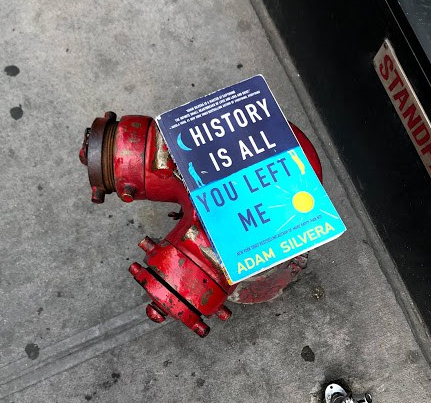
This past summer, I took a trip to New York with one of my best friends. It was his first time in the city, and we, a pair of writers who happen to direct residence halls, were searching for meaning in every direction. This translated, of course, to spending a graciously brief amount of time in our AirBnB and scouring the city for bookstores, coffee shops, and rocks on which to read.

In Brooklyn, on Fulton Street, there’s a bookstore called the Greenlight Bookstore. Unlike The Strand, the Greenlight is approachably small, with texts adorning tables and shelves as though curated by the tastes of the employees. There, I stumbled upon a book with an interesting cover and title: ‘Your Fathers, Where Are They? And the Prophets, Do They Live Forever?’

20370758_10159221717995089_1608269628_n

Continue reading “book club: ‘your fathers, where are they? and the prophets, do they live forever?’”

27: the year of the unfurling.

A year ago, I sat down to make meaning of just what 26 meant for me. Having been ‘my golden year,’ 26 brought me a host of good memories and lessons learned. As it winded down into 27, however, 26 found me spilling onto the ground, my pieces around me. Heart broken, hands shaking, I found myself asking ––

What good is being brave
if love can still fail?

Continue reading “27: the year of the unfurling.”

book club: ‘one day…this will matter’.

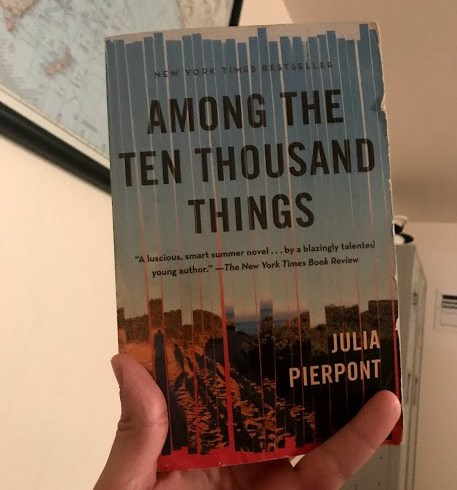
Around April, I received an email from the ‘Book of the Month’ club, letting me know a friend had recommended I join. The friend –– her name’s Laura –– was really only looking for an opportunity to get a free book credit, but she is also brilliant, and I knew this would be a great way for me to find texts I might not otherwise think to search for.

My first selection, titled One Day We’ll All Be Dead and None of This Will Matter, arrived in the second week of May.

19987323_10159136316145089_1389180223_n

Continue reading “book club: ‘one day…this will matter’.”

what we carry.

MK

On the day after we started dating, I took my second boyfriend to downtown Indianapolis. We parked my car at the campus apartments close to the river, walking our way into the city and searching for our first adventure together. For dinner, we chose a pizza place –– not a breadsticks-on-wax-paper pizza place, but a dried-cherries-as-toppings pizza place –– and we faced each other. “So,” he said to me, “what should we talk about?”

Continue reading “what we carry.”

in context.

I don’t know what to write today. I’m tired of writing about you, working to find ways of reinventing your leaving into something beautiful, something learned. When I work to push my mind in a different direction, however, I still see you in the margins. ‘I’m living a good 2017,’ I start to write. My mind whispers, ‘See? Happiness exists outside of his arms.’

At some point, I know I’ll no longer be living in the context of you. I’ll stop organizing my story into two chapters: before and after you left. Joy, opportunity, and believing in myself won’t be such conscious decisions. I won’t wonder, then, how it can be so simple for you to live outside the context of me.

The context of me. Ultimately, this is the one promised constant in my life. No matter what happens, who shows up or leaves, who sees me or doesn’t. I will always live here, in this body with this heart, the depth of these feelings and complexity of this compassion. And perhaps this is the purpose of all these days on my own, to become acquainted with my lifelong company. To pull at threads, finding absolutes, unraveling the great riddle of myself.

Let’s start with the bad parts, the pieces of my being nobody applauds for. I tell too many stories, for one, and I have a tendency of repeating them. When I’m sharing them, I’m working to connect, but I’m also reliving. Immersing myself in the different chapters I’ve seen. Twenty-seven years of life haven’t given me a solid grip on time, so I’m always running late. I don’t put my things in the place they should go, and I don’t reorganize the mess until it bothers me. I’m not very good at conversations that stay above the emotional surface, which makes me a strange presence at the party. Sometimes I cry, so overwhelmed by how much I’m feeling, but I don’t really know how to let somebody take care of me. My attention span isn’t long, and I don’t always know how to make myself tune in, which can hurt the people I love. I’m stubborn, and I generally think the way I see things is right. I talk too much; I can’t always figure out how to let the silence breathe. I sort through my pain by myself, but then I need to share what I find, again and again, with the people around me. I’m not always at home in my body. I don’t separate my heart from matters, ever, and so I don’t know what it means not to take things personally. Sometimes I don’t know how to show up, so I freeze. I am pulled, always, between loving myself fully and wondering how I’ve ever been loved. I’m afraid I’m not the person people tell me I am.

But the bright side. If I’ve learned anything in the aftermath, it’s that I am capable of loving even when it’s difficult. I don’t know how to do harm without remorse. My strength comes from sitting with my pain, looking at the pieces of myself and figuring out how to fashion myself back together. I see people, beyond the versions of themselves they present to the world, and I feel compelled to inspire them to be more of themselves. I’m not afraid of myself, not really, the ugly and difficult parts, the parts that aren’t easy to love or appreciate. I think I remember them when I set out to love somebody else, when I discover the parts of them that aren’t easy to love, and I work to love them anyway. It is in my nature to search for the good, to look beyond the difficult, maybe because I’m so hopeful someone will do the same for me. I write with honesty and with courage, even if I tend to cycle through the same ideas. I forgive freely, and I work to understand, even if I don’t know how to put my walls back down around the ones who’ve hurt me. I’m not always brave, but I always want to be. I get up and run, despite not having the body of an athlete, despite the times that I fall. I show up, each day, and work to write a good story. I love people, no matter what context I’m in, and they know I love them.

And that’s the context I’m probably always going to live in. I’m not always sure that loving me and knowing me is easy or simple, but I’ve got to hope it’s worthwhile. The people around me, the ones who’ve stayed despite my scars, give me the courage to believe it.

So that’s what I’ll focus on writing today. Coffee in hand, headphones in. There are a thousand stories ahead, and –– at your choosing –– they won’t be in the context of you. But this chapter, maybe these next few, will have you in the margins. So I’ll welcome you, here, to the days before the letting go. I’ll hope you are warm and loved and figuring out how to thrive in the context of you.

Because I’m working to do just that.

MK

a thought on our beauty.

Some mornings, I’ll stand
bare feet, hair in tangles

and I’ll survey myself
in the mirror
a twenty-something,
blue boxer briefs,
and, for a flash,
I’ll see it, the
kindness of my eyes
ridged jaw, broad shoulders,
legs carved by miles,
and I’ll believe in it,
my beauty.

How terrible the rarity
that we actually see

ourselves.

i tripped and i fell.

This afternoon, taking advantage of a perplexing 60-degree January day, I set out for a run. I tied my shoes carefully, stretched my limbs, readied my playlist, and took off.

My legs were grateful for the exercise, my lungs putting up no protest. My body fell into rhythm, and I allowed my mind to wander, my eyes to survey the day around me. Beer cans in the yards of college students, a dog lunging for me against the will of its leash. Will I be ready for the half-marathon in June? Am I ready for a week of RA interviews? Is there enough time today to have fun and get prepared for the work week?

As I approached Wheeling Avenue, I surveyed the typically busy street carefully for cars. Spotting an opportunity, I bounded forward. My left foot sank into a pothole, my ankle giving way before my brain had time to process. My hands caught me from the fall, palms against damp concrete. My phone clattered ahead of me, three times. Quickly, I stood and hustled to the sidewalk, where I sank to a sitting position and assessed my situation.

16114808_10158245558985089_3535982391225822841_n.jpg

My palms were bruised but not bleeding. My ankle, sore for a moment, did not swell. I texted a few friends about my plight; they laughed and offered to rescue me. Tentatively, I stood, took a few steps. No, I told them, I think I can still run.

And, after a little walking, I did. I broke into a run and finished the five miles. Gratitude for warm weather and tenacious ankles.

If 2016 taught me anything, it’s how to believe in myself again after a fall. How to stand again, and to run.

I broke into a run. I fell. I got up. I ran.

Let this be the pattern of my life.